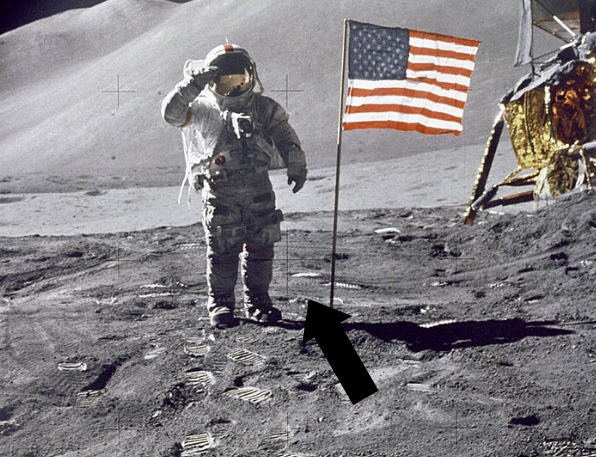
The Film and Crosshairs
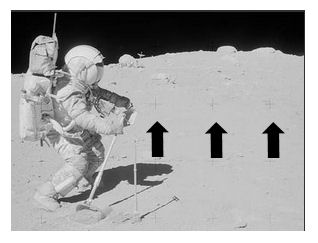 By the time of Apollo 17, a total of 18 rolls of film were taken of the lunar surface. One would wonder how the film was protected from the elements on the moon. Temperatures in the sunlight can reach 260 degrees Fahrenheit. Also when the sun is not shining temperatures can go down to -280 degrees Fahrenheit.
Could the film of the day withstand these temperatures? Even if the temperature was half the amount noted. This is what Kodak says on their website about film storage:
- For general storage, store unexposed camera films at 13°C (50°F) or lower.
- For periods exceeding six months, store unexposed camera films at -18°C (0°F) or lower.
- High humidity can promote mold growth and ferrotyping. Low humidity can create static marks when printing or cause buckling due to uneven moisture loss. Exposed film, particularly color film, deteriorates more rapidly than unexposed film.
The Apollo cameras were equipted with “crosshairs” which were on the film plate. These crosshairs would always appear in front of the image not behind the image. NASA has many explanations for this but sometimes you have to apply “Occums Razor.”
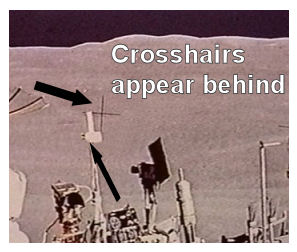 This principle, which is considered in scientific circles states Best Explanation Is the Simplest. I agree!!! It looks like the crosshairs have been mis-placed. What does this mean? You decide!!